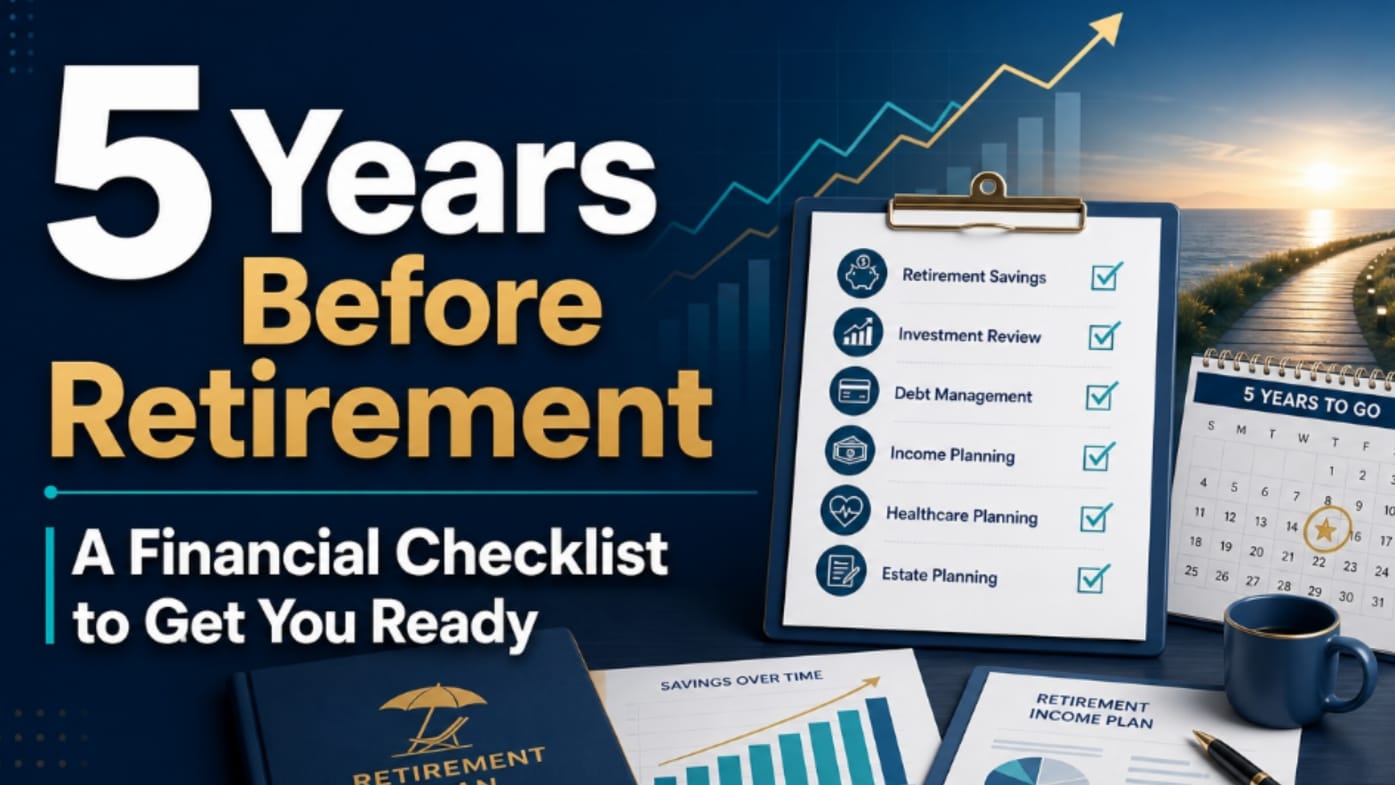
Why the Last 5 Years Matter So Much
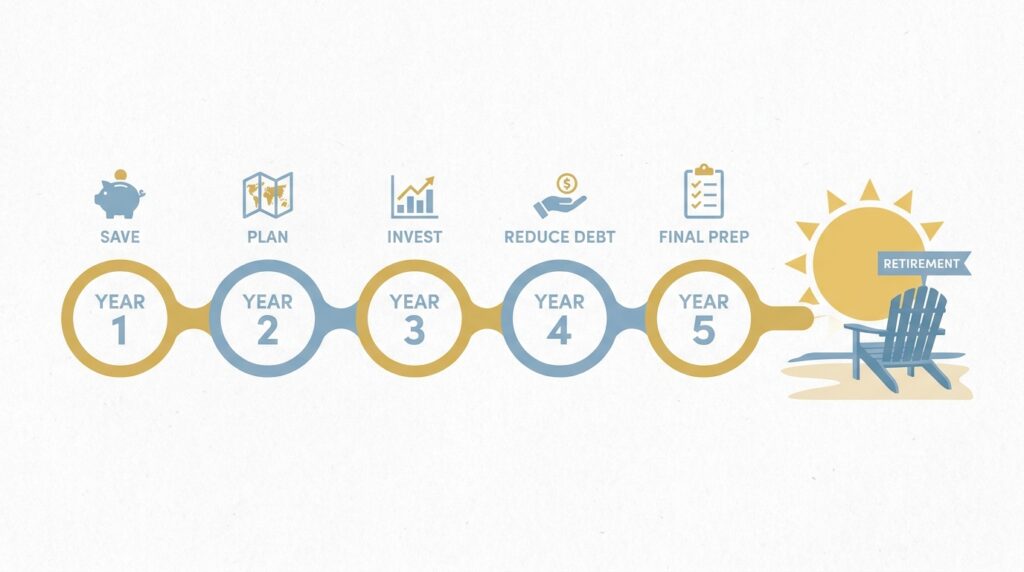
Many people wait until the last year to think about retirement. By then, it’s too late to fix major problems like low savings or high debt. Five years gives you enough time to:
- Grow your savings
- Pay off debt
- Fix gaps in your retirement income
- Plan your healthcare
- Get mentally ready for a new lifestyle
Think of these five years as your final preparation phase before a big life change.
1. Calculate Your Expected Retirement Income
Start by finding out exactly how much money you will receive after retirement. This may include:
- Pension payments
- Provident fund or gratuity
- Social security benefits
- Rental income
- Investment returns
Write down each source and the expected monthly or yearly amount. This gives you a clear picture of your future income.
Tip: Contact your HR department or pension office now. Ask for an estimated pension statement so there are no surprises later.
2. Estimate Your Future Monthly Expenses

Your expenses in retirement will look different from your expenses today. Some costs may go down, such as:
- Daily commuting
- Work clothes
- Office lunches
But other costs may go up, such as:
- Healthcare
- Travel and leisure
- Family support
List your expected monthly expenses in retirement. Compare this number with your expected retirement income from Step 1. If there is a gap, you now have five years to close it.
3. Pay off High-Interest Debt
Debt can quietly eat away at your retirement income. Before you retire, try to pay off:
- Credit card balances
- Personal loans
- Car loans
- Any high-interest debt
If possible, aim to enter retirement debt-free or with only manageable low-interest debt, such as a small portion of a mortgage.
Why this matters: Fixed retirement income makes it harder to handle debt payments. The less debt you carry, the more freedom you will have.

4. Build or Boost Your Emergency Fund
An emergency fund is even more important after retirement, since you will no longer have a regular paycheck. Aim to save at least 6 to 12 months of living expenses in an easily accessible account.
This fund will protect you from:
- Medical emergencies
- Unexpected home repairs
- Sudden family expenses
Start building this fund now if you don’t already have one.
5. Review and Increase Your Retirement Savings
If you have a retirement savings account, provident fund, or investment plan, review it carefully. Ask yourself:
- Is my current saving rate enough?
- Can I contribute more in these final five years?
- Are my investments still suitable for my age?
As retirement gets closer, many financial experts suggest shifting a portion of your investments from higher-risk options (like stocks) to safer options (like bonds or fixed deposits). This protects your savings from market ups and downs right before you need them.

6. Check Your Health Insurance and Medical Coverage
Healthcare costs often increase with age. Five years before retirement is the right time to:
- Check if your health insurance continues after retirement
- Compare private health insurance options
- Understand what your pension or government scheme covers
- Set aside a separate medical fund if needed
Don’t wait until you retire to think about this. Medical plans can be harder and more expensive to get later in life.
7. Think about Where You Will Live
Housing is one of the biggest retirement decisions. Ask yourself:
- Will I stay in my current home?
- Do I want to downsize to a smaller, low-maintenance place?
- Do I want to move closer to family?
- Is my home loan fully paid off?
If you plan to sell or buy property, five years gives you enough time to research, save, and make a smart decision without rushing.
8. Plan for a Possible Part-Time Income
Many retirees choose to stay partly active through consulting, freelancing, teaching, or a small business. If this interests you, use these five years to:
- Build skills or certifications
- Grow a professional network
- Test a small side project
- Research alternative income ideas
Even a small extra income after retirement can reduce pressure on your savings and keep you mentally active.
9. Update Your Will and Important Documents
This step is often ignored, but it is essential. Make sure you have:
- An updated will
- Nominee details on all bank accounts and investments
- Updated life insurance beneficiaries
- Copies of important documents in a safe place
This protects your family and ensures your wishes are followed.
10. Prepare Mentally and Emotionally
Financial readiness is only half the picture. Retirement is also a major lifestyle change. Use these five years to:
- Think about how you will spend your time
- Explore hobbies or volunteer work
- Talk with your spouse or family about expectations
- Build a social routine outside of work

A smooth emotional transition often depends on the planning you do before you retire, not after.
Final Thoughts
The five years before retirement are your best opportunity to fix gaps, reduce risk, and build confidence in your future. By following this checklist step by step, you can enter retirement with a clear financial plan and a calm mind.
Start early, review your progress every few months, and adjust your plan as needed. A well-prepared retirement is not about luck. It’s about the small, steady steps you take today.