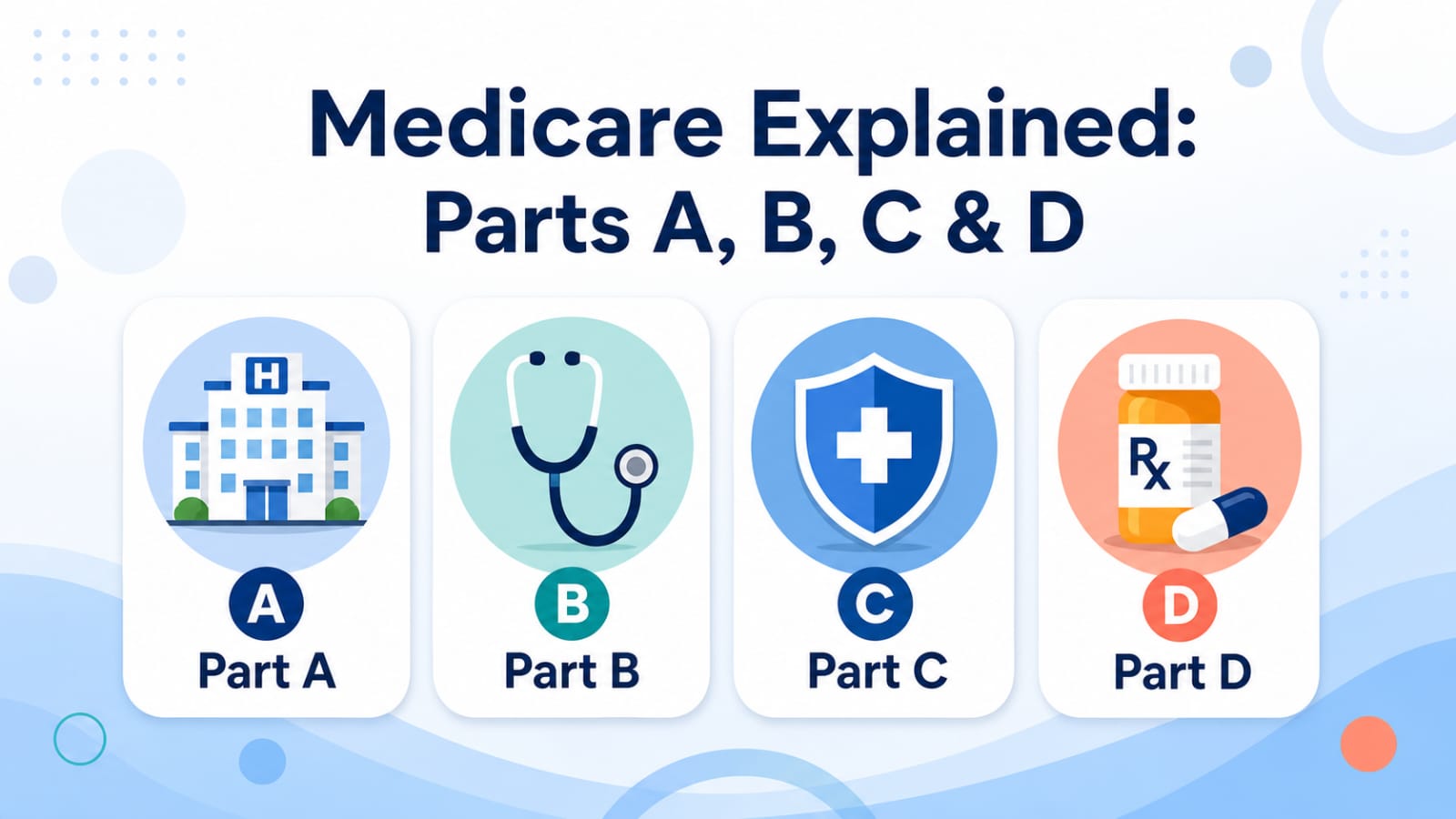
A simple guide for Americans turning 65 or planning ahead.
Turning 65 soon? Medicare can feel confusing at first. There are many parts. Many rules. Many deadlines. But don’t worry. This guide breaks it all down in plain, simple English. By the end of this article, you will understand what each part of Medicare covers. You will also know the costs. And you will learn the deadlines you cannot afford to miss. Let’s get started.
What Is Medicare?
Medicare is a federal health insurance program. It is mainly for Americans aged 65 and older. Some younger people with certain disabilities also qualify. Medicare helps pay for your medical care. This includes hospital stays. Doctor visits. Prescription drugs. And more. Medicare has four main parts. Each part covers something different. Let’s look at each one.

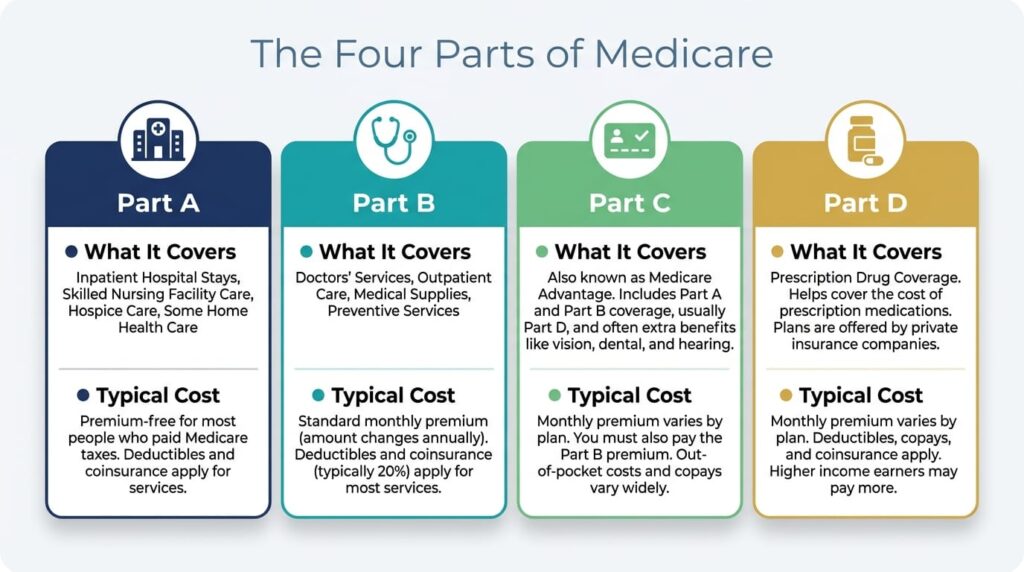
The Four Parts of Medicare
Part A – Hospital Insurance
Covers hospital stays, skilled nursing care, and hospice care. Usually free if you worked 10+ years.
Part B – Medical Insurance
Covers doctor visits, outpatient care, and preventive services. Has a monthly premium.
Part C – Medicare Advantage
Private insurance plans approved by Medicare. Often bundles extra benefits.
Part D – Prescription Drugs
Helps cover the cost of your medications.
Part A: Hospital Insurance
Part A covers your hospital stays. It also covers skilled nursing facility care. And hospice care. Some home health care is included too. Here is good news. If you or your spouse paid Medicare taxes for at least 10 years, Part A is usually free. You already paid for it through payroll taxes during your working years.

Part B: Medical Insurance
Part B is different. It covers your outpatient care. This means doctor visits. Lab tests. Preventive services. And durable medical equipment. Unlike Part A, Part B comes with a monthly premium. The amount can change based on your income.
Important: If you don’t sign up for Part B when you’re first eligible, and you don’t have other coverage, you could face a late enrollment penalty. This penalty can stay with you for as long as you have Medicare.
Part C: Medicare Advantage
Part C works a bit differently. Instead of getting coverage directly from the government, you choose a private insurance plan.
These plans are approved by Medicare. They must cover everything Original Medicare covers. But many go further. They often include extra benefits. Things like dental care. Vision care. Hearing aids. Sometimes even gym memberships.
There is a trade-off, though. Most Medicare Advantage plans use networks. This means you may need to use specific doctors or hospitals within that plan.
Part D: Prescription Drug Coverage
Part D helps cover the cost of your medications. Even if you don’t take many medications right now, it’s still smart to enrol early. Just like Part B, delaying Part D enrolment without other drug coverage can lead to a permanent penalty added to your monthly premium.

Comparing the Four Parts
Part A: Covers hospital stays, nursing care, hospice — usually free
Part B: Covers doctor visits, outpatient care — monthly premium
Part C: Private plan, often bundles extras — cost varies by plan
Part D: Covers prescription drugs — monthly premium
When Should You Enroll?
Timing matters a lot with Medicare. Missing your enrolment window is one of the most common — and costly — mistakes people make.
Your Initial Enrolment Period is seven months long:
– 3 months before your birthday
– Your birthday month
– 3 months after your birthday
Mark this window on your calendar. It helps you avoid penalties and gaps in coverage.
Putting It All Together. Let’s do a quick recap:
Part A — hospital coverage, usually free
Part B — doctor visits, monthly premium
Part C — private Medicare Advantage plans
Part D — prescription drug coverage
Understanding these four parts helps you choose the right coverage. It also helps you avoid unnecessary penalties.

Final Thoughts
Medicare does not have to be confusing. Once you understand the basics, everything becomes much clearer.
Start early. Learn the parts. Know your deadlines. And don’t be afraid to ask questions. Your health, and your wallet, will thank you.
Disclaimer: This article is for general informational and educational purposes only. It does not constitute medical, financial, or legal advice. Medicare rules, costs, and deadlines can change. Please visit the official Medicare website at medicare.gov or call 1-800-MEDICARE for guidance specific to your situation.