
If you work for the U.S. federal government, you have access to one of the best retirement plans in the country. It’s called the Thrift Savings Plan, or TSP. Many federal employees don’t fully understand how it works. This guide breaks it down in simple terms.
What Is the Thrift Savings Plan?
The TSP is a retirement savings plan for federal employees and members of the military. It works a lot like a 401(k) plan in the private sector. You put money into the account. That money grows over time. You use it later, when you retire.
The TSP is run by an independent government agency. That agency is called the Federal Retirement Thrift Investment Board. It is not run by your employing agency. This keeps your money separate and protected.
Millions of federal workers use the TSP. It is the largest defined contribution retirement plan in the world. That size helps keep costs low for everyone in the plan.
Who Can Use the TSP?
You can use the TSP if you are:
- A civilian federal employee under FERS (Federal Employees Retirement System)
- A civilian federal employee under CSRS (Civil Service Retirement System)
- A member of the uniformed services, including the National Guard and Reserve
Most new federal employees are enrolled in the TSP automatically. If you started your job recently, you were likely signed up on day one.

Traditional TSP vs. Roth TSP
The TSP offers two ways to save. You can pick one, or you can use both at the same time.
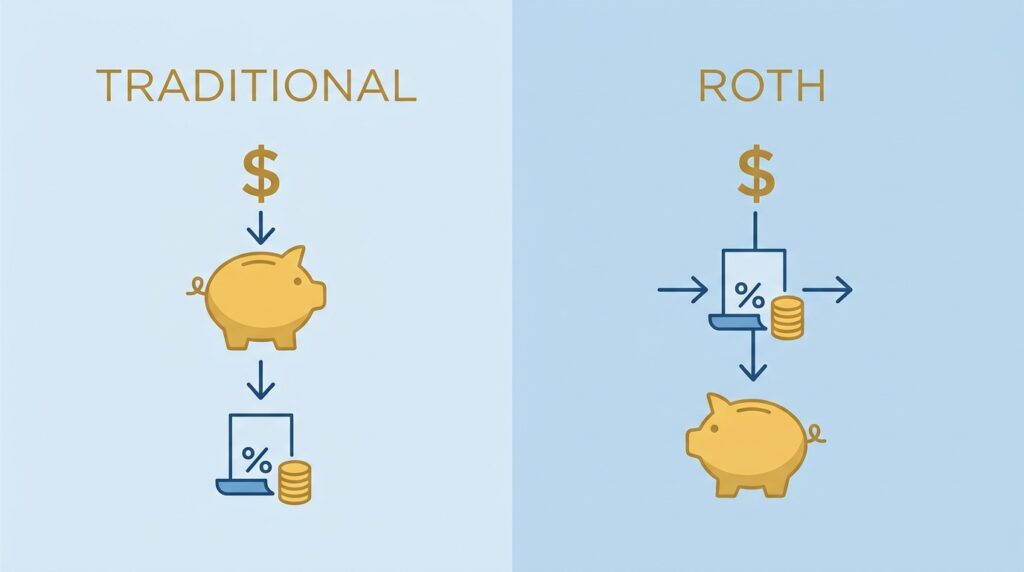
Traditional TSP This uses pre-tax money. Your contribution comes out of your paycheck before taxes are taken. This lowers your taxable income today. You pay taxes later, when you withdraw the money in retirement.
Roth TSP This uses after-tax money. You pay taxes on your paycheck first. Then your contribution goes into the TSP. The money grows tax-free. You pay no taxes when you withdraw it in retirement, as long as you follow the rules.
Which one is better depends on your situation. If you think your tax rate will be higher in retirement, Roth may help you more. If you think your tax rate will be lower in retirement, traditional may help you more. Many people choose to split their contributions between both.
Agency Matching Contributions
This is one of the best parts of the TSP. If you are covered by FERS, your agency adds money to your account too. This is called a match.
Here is how it works:
- Your agency automatically puts in 1% of your salary, even if you contribute nothing
- Your agency matches your first 3% dollar for dollar
- Your agency matches your next 2% at fifty cents on the dollar
If you contribute 5% of your salary, your agency adds a total of 5% as well. That means you get double the value of your own contribution. This is free money. Most experts recommend contributing at least 5% to get the full match.
CSRS employees do not receive agency matching. If you are under CSRS, your contributions are still valuable, but there is no employer match to capture.

2026 TSP Contribution Limits
The IRS sets limits on how much you can contribute each year. These limits change from year to year.
For 2026:
- The elective deferral limit is $24,500. This is the most you can contribute across traditional and Roth TSP combined. The catch-up contribution limit for participants age 50 and older is $8,000. Participants turning age 60, 61, 62, or 63 in 2026 get a higher catch-up limit of $11,250.
- The employer match does not count against your personal contribution limit. The limits above are only for the amount you personally contribute.
- If you are 50 or older, extra contributions beyond the regular limit spill over automatically toward your catch-up limit. You don’t need to set up a separate election for this.
A Word of Caution on Front-Loading Contributions
Some employees try to max out their TSP early in the year. This can backfire.
- If you hit your contribution limit before the last pay period of the year, your contributions stop for the rest of the year. Your agency match stops too, since it’s based on your contribution.
To avoid losing free matching money, spread your contributions evenly across all pay periods in the year. Divide your annual goal by the number of pay periods you have left. This keeps your match flowing every single pay period.
TSP Investment Funds
Once your money is in the TSP, you choose how to invest it. The TSP offers a small number of simple, low-cost funds.
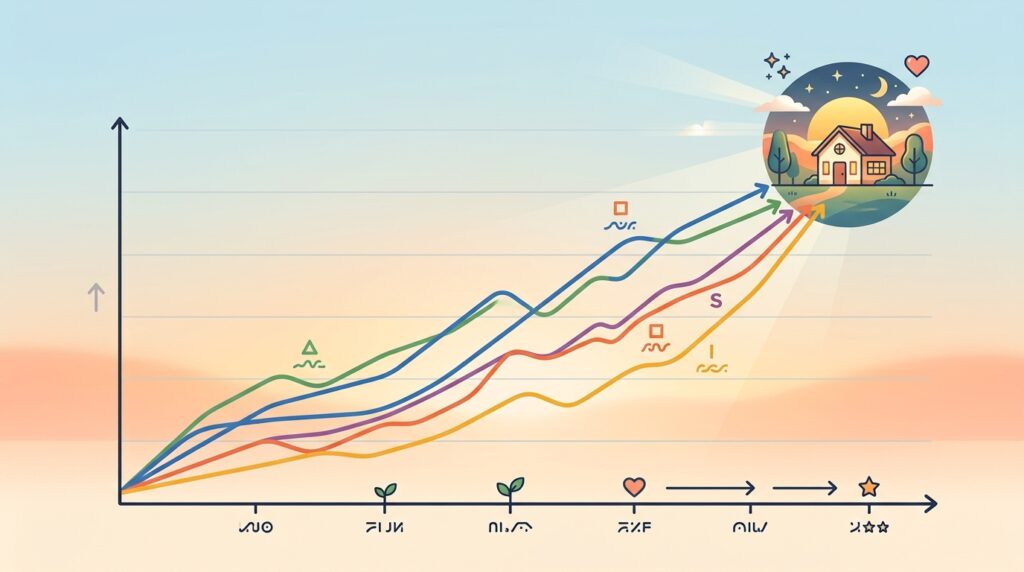
The G Fund This fund invests in government securities. It never loses value. It is the safest option, but it also has the lowest long-term growth potential.
The F Fund This fund tracks the U.S. bond market. It carries more risk than the G Fund, but it can offer higher returns over time.
The C Fund This fund tracks the S&P 500 index. It includes large U.S. companies. It carries more risk, but it has strong long-term growth potential.
The S Fund This fund tracks small and mid-sized U.S. companies. It is more volatile than the C Fund, but it can boost diversification.
The I Fund This fund tracks international stocks. It adds exposure outside the United States.
Lifecycle Funds (L Funds) These are all-in-one funds. Each one is built for a target retirement date. The fund automatically shifts from riskier investments to safer investments as you get closer to retirement. Many federal employees choose an L Fund because it requires no ongoing management.
You can mix and match any of these funds based on your own risk tolerance and retirement timeline.
TSP Fees Are Low
One major advantage of the TSP is its low cost. The TSP charges very low administrative fees compared to many private retirement plans. Over decades, lower fees can mean tens of thousands of dollars more in your account at retirement. This is one reason financial experts often recommend federal employees max out their TSP before looking at other investment accounts.
When Can You Access Your TSP Money?
The TSP is built for retirement. There are rules about when and how you can take money out.
In-Service Withdrawals While you are still working, you generally cannot take money out of your TSP except in limited cases, such as financial hardship or after reaching age 59 and a half.
TSP Loans You can borrow from your own TSP account through a loan program. You pay yourself back with interest through payroll deductions. This is not free money. It reduces your invested balance while the loan is outstanding.
After You Leave Federal Service Once you separate from federal employment, you have several options:
- Leave your money in the TSP and let it keep growing
- Withdraw it in a lump sum
- Set up installment payments
- Roll it over into an IRA or another employer’s retirement plan
Required Minimum Distributions Like other retirement accounts, the TSP has rules about when you must start withdrawing money later in life. These rules follow current IRS guidance, which has changed in recent years, so it’s worth checking the latest rules as you approach that age.
Why the TSP Matters for Your Retirement
For most federal employees, the TSP is a core part of retirement income. Under FERS, retirement income typically comes from three sources: your FERS pension, Social Security, and your TSP. The TSP is often the largest of the three, especially if you start early and contribute consistently.
The earlier you start, the more time your money has to grow. Even small contributions add up over a full career, especially with compound growth and the agency match working in your favor.
Simple Tips to Get the Most From Your TSP
- Contribute at least 5% to get your full agency match
- Spread contributions evenly across the year to avoid losing match dollars
- Consider a mix of traditional and Roth contributions
- Review your fund choices at least once a year
- Increase your contribution rate whenever you get a raise
- Avoid taking a TSP loan unless it’s truly necessary
- Don’t cash out your TSP early when changing jobs; roll it over instead
Final Thoughts
The Thrift Savings Plan is one of the strongest retirement benefits available to American workers today. It combines low fees, a generous employer match, and simple investment choices. Understanding how it works puts you in a better position to build real wealth over your federal career.
Take a few minutes to log into your TSP account. Check your contribution rate. Check your fund choices. Small adjustments today can make a big difference by the time you retire.
This article is for general information only. It is not personalized financial or tax advice. For guidance specific to your situation, talk to a qualified financial advisor.