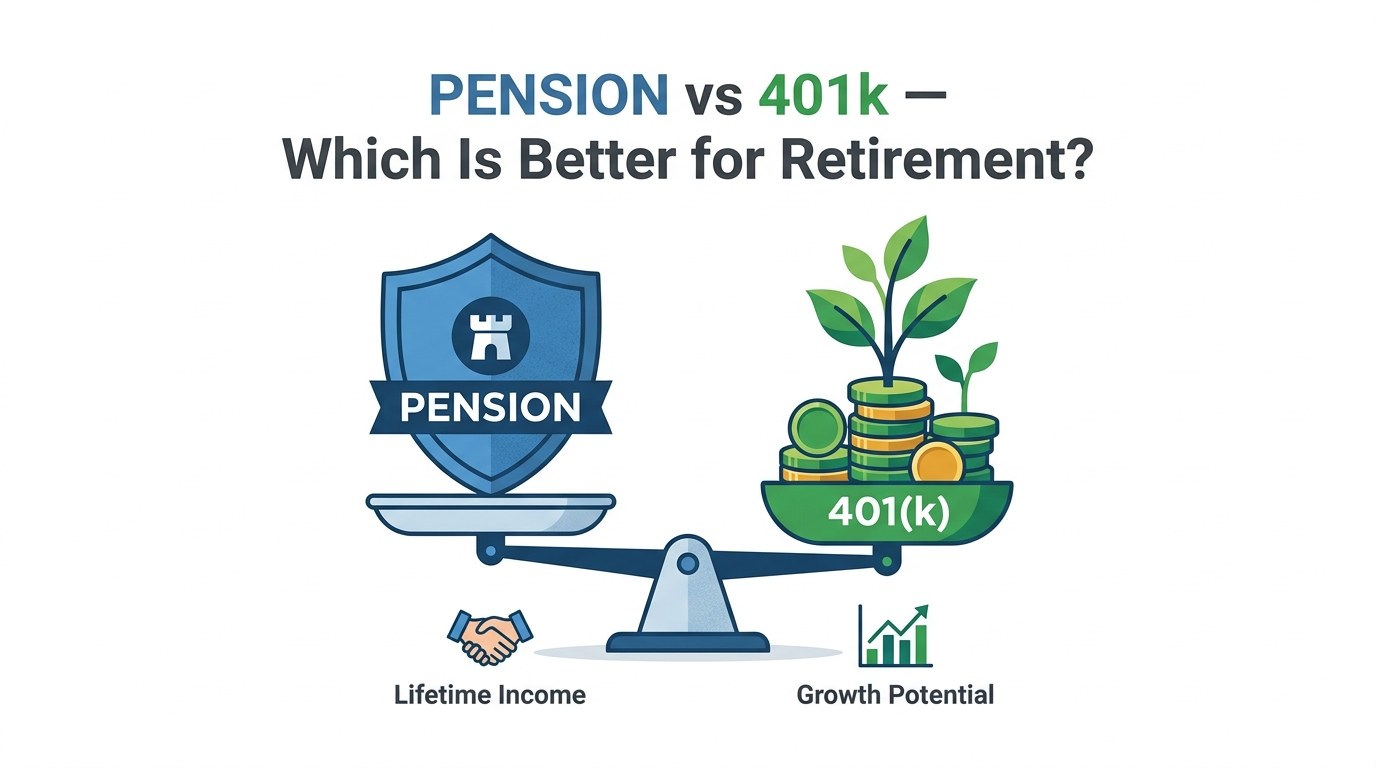
Retirement planning can feel confusing. Many people hear two words a lot: pension and 401(k). Both help you save money for retirement. But they work in very different ways. This article breaks down both options in simple terms. By the end, you will know which one might work best for you.
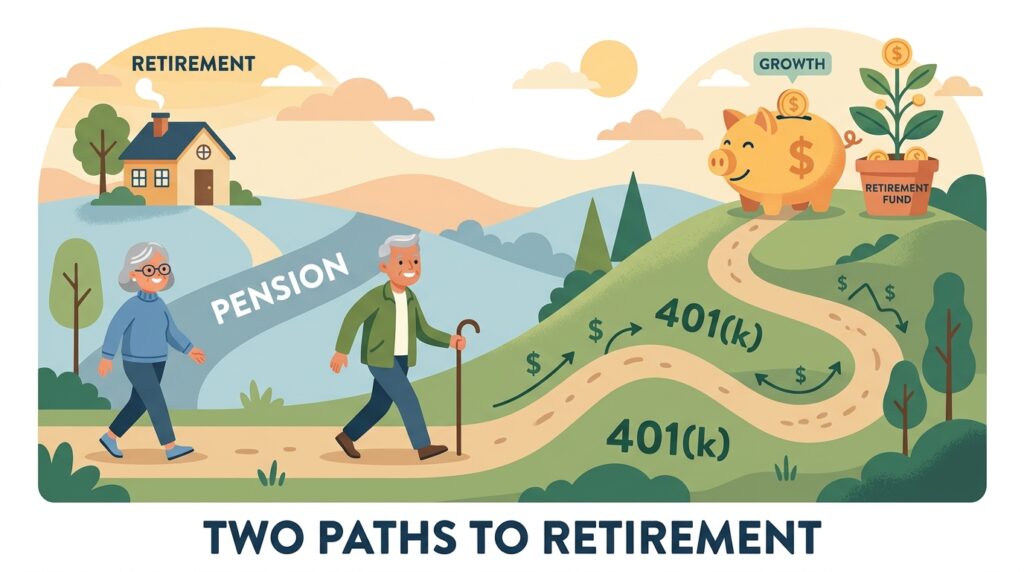
What Is a Pension?
A pension is a retirement plan. Your employer sets it up. Your employer also funds it. You do not need to add your own money in most cases.
Here is how it works. You work for a company for many years. The company promises to pay you a set amount of money each month after you retire. This amount is often based on your salary and years of service. It does not change, even if the stock market crashes.
Pensions are also called “defined benefit plans.” This is because the benefit is defined in advance. You know what you will get. You just need to work long enough to earn it.
Pensions were once very common in America. Many workers had them in the 1950s through the 1980s. Today, they are less common. Most private companies do not offer them anymore. But some government jobs still do. Teachers, police officers, and firefighters often have pensions. Some union jobs also offer them.
What Is a 401(k)?
A 401(k) is a different kind of retirement plan. It is called a “defined contribution plan.” This means you decide how much money to put in. Your employer may also add some money. But the final amount you get later is not guaranteed.
Here is how it works. You choose a percentage of your paycheck to save. This money goes into your 401(k) account automatically. You pick investments for this money. Common choices are stock funds and bond funds.
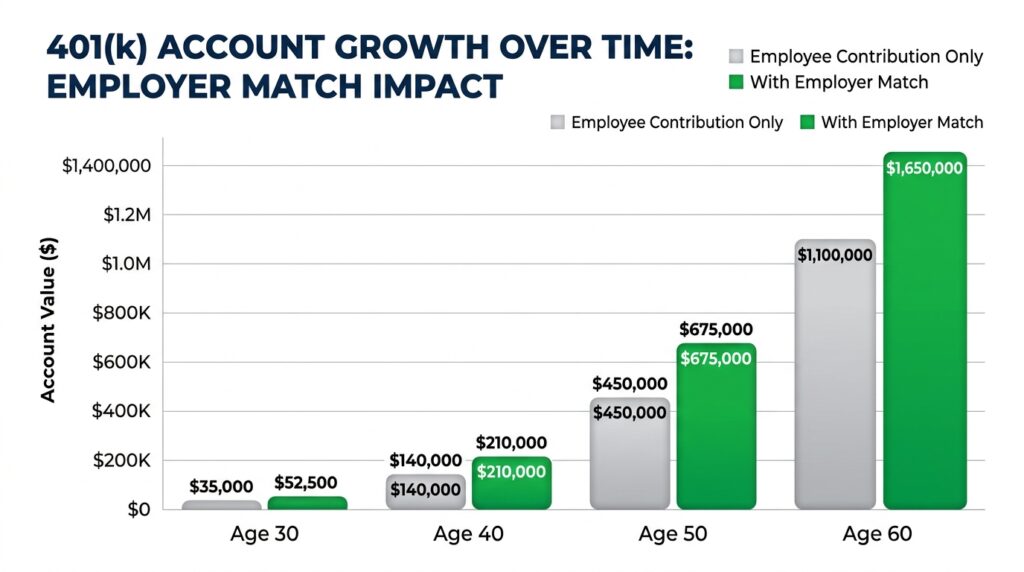
Many employers offer a “match.” This means they add money too. For example, your employer might match 50% of what you put in, up to a certain limit. This is like free money. It is smart to take full advantage of a match if you can.
The money in your 401(k) grows over time. It grows through investment returns. But it can also lose value. If the stock market drops, your account balance drops too. This is different from a pension, which stays steady no matter what the market does.
Key Differences Between Pensions and 401(k)s
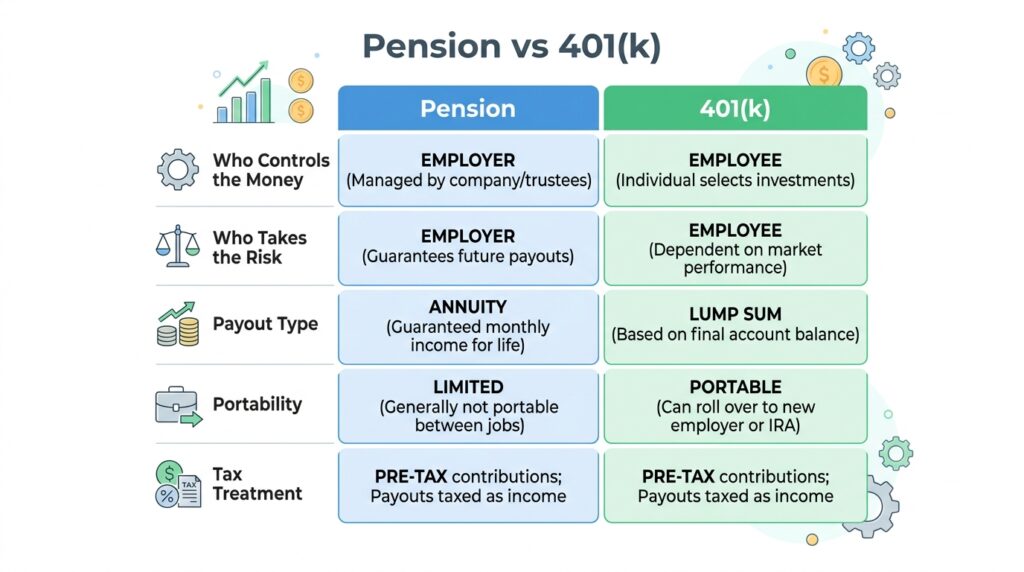
Let’s compare the two side by side.
Who controls the money? With a pension, your employer controls the money. With a 401(k), you control the money. You choose how much to save. You choose your investments.
Who takes the risk? With a pension, your employer takes the investment risk. If the pension fund loses money, your employer must still pay you the promised amount. With a 401(k), you take the risk. If your investments perform badly, you get less money.
How much do you get? A pension gives you a steady, predictable amount each month. A 401(k) gives you whatever your account has grown to. This amount can be higher or lower than you expect.
Can you take it with you? A 401(k) is portable. If you change jobs, you can take your 401(k) with you. You can roll it into a new employer’s plan or into an IRA. A pension is usually tied to one employer. If you leave too early, you may lose some or all of your pension benefit.
How is it taxed? Both plans offer tax benefits. With a traditional 401(k), you do not pay taxes on the money you put in today. You pay taxes later when you take money out. Pension payments are also taxed as income when you receive them.
Benefits of a Pension
Pensions offer real peace of mind. Here are some reasons people like them.
You know what to expect. Your monthly payment does not change based on the stock market. This makes budgeting easier in retirement.
You do not have to make investment choices. Your employer manages the fund. You do not need to worry about picking stocks or bonds.
Pensions often continue for your whole life. Some plans even continue paying a spouse after you pass away. This is called a “survivor benefit.”
Downsides of a Pension
Pensions are not perfect. There are some real drawbacks.
You need to stay at one job for a long time to get the full benefit. If you switch jobs often, you may not qualify for a pension at all.
Pensions are becoming rare. Most private companies no longer offer them. If your employer does not offer one, you cannot choose to have one.
There is also some risk. If your employer’s pension fund is poorly managed, or if the company goes bankrupt, your pension could be at risk. Government programs offer some protection, but not always full protection.
Benefits of a 401(k)
A 401(k) also has real strengths.
You have control. You choose how much to save. You choose your investments. You can be aggressive when you are young. You can be more careful as you near retirement.
It is portable. You can take it with you from job to job. This fits well with how people work today. Many Americans change jobs several times during their careers.
Your savings can grow a lot. Over many years, stock market investments have historically grown faster than pension funds. This means your final balance could be larger.
You may get free matching money. Many employers match part of what you contribute. This boosts your savings without extra work on your part.
Downsides of a 401(k)
A 401(k) also has weaknesses.
The market can drop. If you retire during a market downturn, your account balance could be much lower than planned. This creates uncertainty.
You must make decisions. You need to choose investments. You need to decide how much to contribute. Not everyone feels confident doing this.
There is no guarantee. Unlike a pension, nobody promises you a set amount. Your final balance depends on how much you saved and how your investments performed.
Which One Is Better?
The honest answer is: it depends.
If you value certainty, a pension may feel better. You know exactly what you will get each month. There is less stress about market ups and downs.
If you value control and flexibility, a 401(k) may feel better. You can grow your savings faster. You can move your money between jobs. You are not stuck waiting for years to qualify.
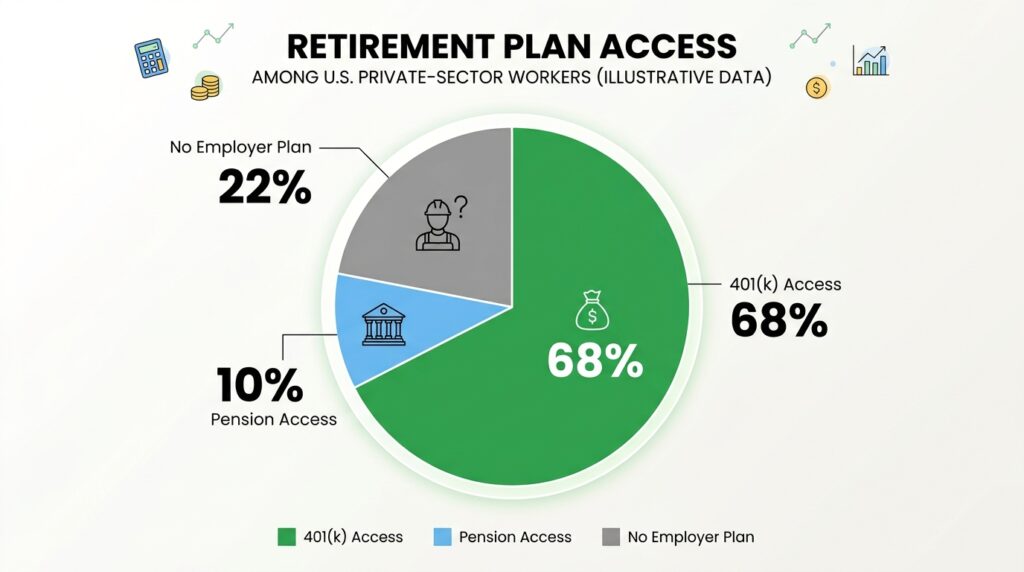
For most Americans today, the choice is not really a choice. Pensions are rare outside of government jobs. Most private-sector workers only have access to a 401(k). This means the real question is not “which is better” but “how do I make the most of what I have?”
How to Make the Most of a 401(k)
If a 401(k) is your main option, here are simple tips.
Start early. The sooner you start saving, the more time your money has to grow.
Contribute enough to get the full employer match. This is free money. Do not leave it on the table.
Increase your savings rate over time. Even small increases add up over many years.
Choose a mix of investments that fits your age and comfort level. Younger workers can often take more risk. Older workers may want more stability.
Do not panic during market drops. Markets go up and down. Staying invested over the long run has historically paid off.
What If You Have a Pension?
If you are lucky enough to have a pension, here are some tips too.
Learn the rules of your plan. Find out how many years you need to work to get the full benefit.
Ask about survivor benefits. Find out if your pension will continue paying your spouse if you pass away first.
Do not rely on your pension alone. Even with a pension, it helps to save extra money. A 401(k), IRA, or personal savings account can add a safety net.
Final Thoughts
Both pensions and 401(k)s aim to do the same thing. They help you build income for retirement. But they work in very different ways.
A pension offers safety and predictability. A 401(k) offers control and growth potential. Neither one is perfect. Each has trade-offs.
For most working Americans today, a 401(k) will be the main retirement tool. The best step you can take is simple. Start saving now. Take advantage of any employer match. Stay consistent over time. Small steps today can lead to a comfortable retirement tomorrow.